

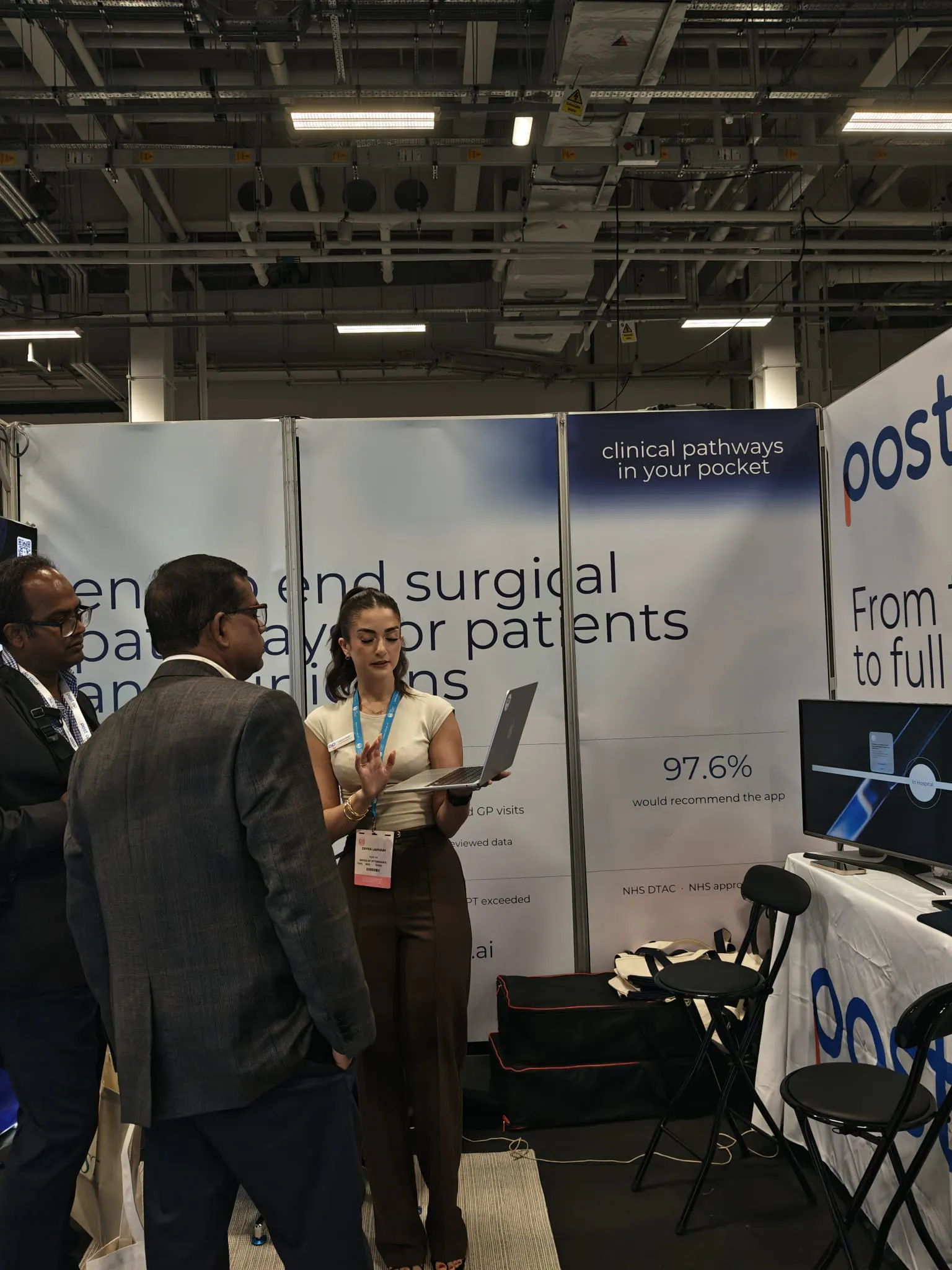
Post Op sponsors the changing face of orthopaedics at the annual BOA Congress, Olympia, London
Why the change is happening outside the hospital
The British Orthopaedic Association Annual Congress brought the UK orthopaedic community to Olympia London from 22 to 25 September 2026. Surgeons, trainees, physiotherapists, nurses and managers filled the halls, and many of them found their way to Post Op on Stand 133.
The conversations there kept returning to the same point. The operation itself is only a small part of a patient's journey. The weeks before surgery and the weeks after it decide much of the outcome, and most of that time is spent at home.


What surgery can learn from aviation
In 2024, airlines carried 4.7 billion passengers on 37.4 million scheduled flights, with 296 deaths (ICAO). That is fewer than one death per ten million passengers.
Surgery is a very different undertaking, but the contrast is still striking. Around 313 million operations take place worldwide each year, and 4.2 million people die within 30 days of surgery (Nepogodiev et al., The Lancet, 2019). That is 7.7% of all deaths globally, more than HIV, tuberculosis and malaria combined.
Aviation did not get safer by focusing only on the flight. It built checklists, standard procedures and constant monitoring into every stage, from take-off to landing. Surgery adopted the WHO Surgical Safety Checklist for the operating theatre. The next step is to bring the same discipline to the weeks around the operation.
We think of each surgical journey as a flight in three stages:
- Before surgery: from booking through pre-operative assessment, when patients can be prepared, informed and optimised.
- In hospital: admission, the operation and discharge.
- Recovery: outpatient follow-up, discharge from care, and the return to normal life.
Most of the time, and much of the risk, sits in the first and last stages. Those are the stages that happen outside the hospital walls, and that is where orthopaedics is changing fastest.

Zero complications in 30 days
For patients, recovery no longer has to be a gap between appointments. A patient can check their wound images, complete exercises with guidance at home, and report how they are feeling while their team is watching. Problems are spotted earlier, and patients feel less alone after they leave the ward.
For surgeons and their teams, the benefit is continuity. Clinicians can see how patients are doing between visits and between lists, rather than waiting for the next clinic. Concerns come to them in a structured way, and routine follow-ups that add little can be safely replaced.
For hospitals, better data changes how performance is measured. When a pathway is structured and monitored, co-morbidities and complications are recorded fully. That gives a truer picture of case mix and helps hospitals' results against national benchmarks reflect the care they actually deliver.